What we’ve learned from thousands of student interactions with food content
Food is practical, social and essential to the student journey, making it a powerful topic in student communications that students continue to engage with throughout their experience.
Working with universities across the UK to tell better stories about food on campus using our Browzer Engage platform, here’s what we’ve learned and why food content should be viewed as an effective part of your comms strategy.
The challenge
Fragmented communication channels
Low visibility for catering services
Missed engagement opportunities
Across the board, universities struggle with static, scattered information on catering — on websites, multiple pages and intranets. This makes it difficult to access and understand at the essential pre-arrival, on-boarding and arrival stages in the student journey.
A smarter approach generates commercial benefit
Centralise content into one clear, student-friendly hub
Create strategic video and campaign-led content plans
Highlight value, convenience and choice
Use data insights to drive future content decisions
On our Browzer platforms, food content isn’t just a ‘nice to have’, it’s a key driver of traffic and repeat visits. The data across university food content shows that when you give students useful and up-to-date information on campus catering in one place, they keep coming back for more.
We achieve this by operating as a seamless extension of your Catering, Commercial, and Halls Life teams. Acting as your dedicated digital arm, we handle the creative heavy lifting, from video production to data analysis, freeing your staff to focus on operations while we drive engagement and commercial growth.

So what kind of content do your students want to see? Here’s our top five:
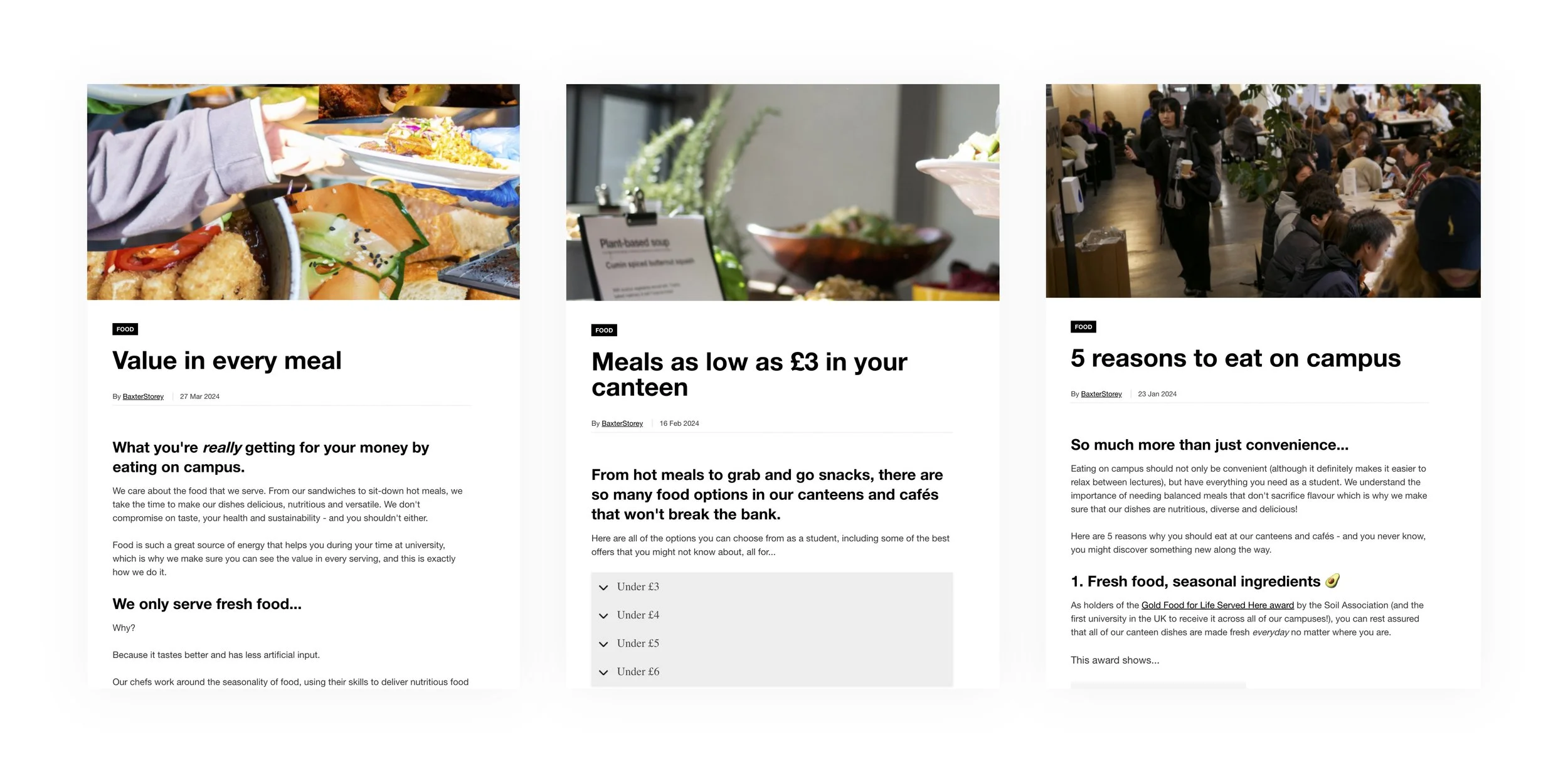
1. Catering outlet menus are essential
Students want to know ‘What can I eat today, and where?’ before stepping food on campus.
Menu content is the biggest driver of traffic and returning visits. Students return to these pages again and again to check what’s on offer, explore dietary options and plan ahead. Also popular in the pre-arrival stage, menus and visuals are a great way to showcase the catering offer early before key commercial opportunities like pre-paid meal packages go live.
“In a single month, UAL’s weekly menus landing page on their Browzer Engage platform generated 5,899 views, making it their top performing landing page (above events and the homepage) and making up 33% of all food content page views.”
2. Discounts and offers drive engagement
Unsurprisingly, affordable and convenient options on campus perform strongly.
Promoting loyalty schemes, bundle deals, limited-time offers and regular discounts not only increases engagement but also supports perceptions of value on campus and student wellbeing which is particularly important in the context of cost of living.
They’re also a great way to promote sustainable practices, such as ‘Too Good To Go’ or discounts on surplus food, that can help students save money and the university save food waste while generating extra income at the end of each day.
3. Meal plans can generate significant revenue
Pre-paid meal plans and packages can be a powerful commercial tool for the university while making food and drink hassle-free for students on campus.
Typically buried in long website pages or Intranets, time-sensitive food content like this performs best when it’s easy to access, understand and purchase in one place. When promoted at the right time, students and guardians do engage.
“Queen Mary generated over £100k of meal plan sales in a single week using Browzer Engage.”
4. Food events combine two high performers
Events are also one of the biggest engagers on our platforms, so it’s no surprise that events themed around food perform well too.
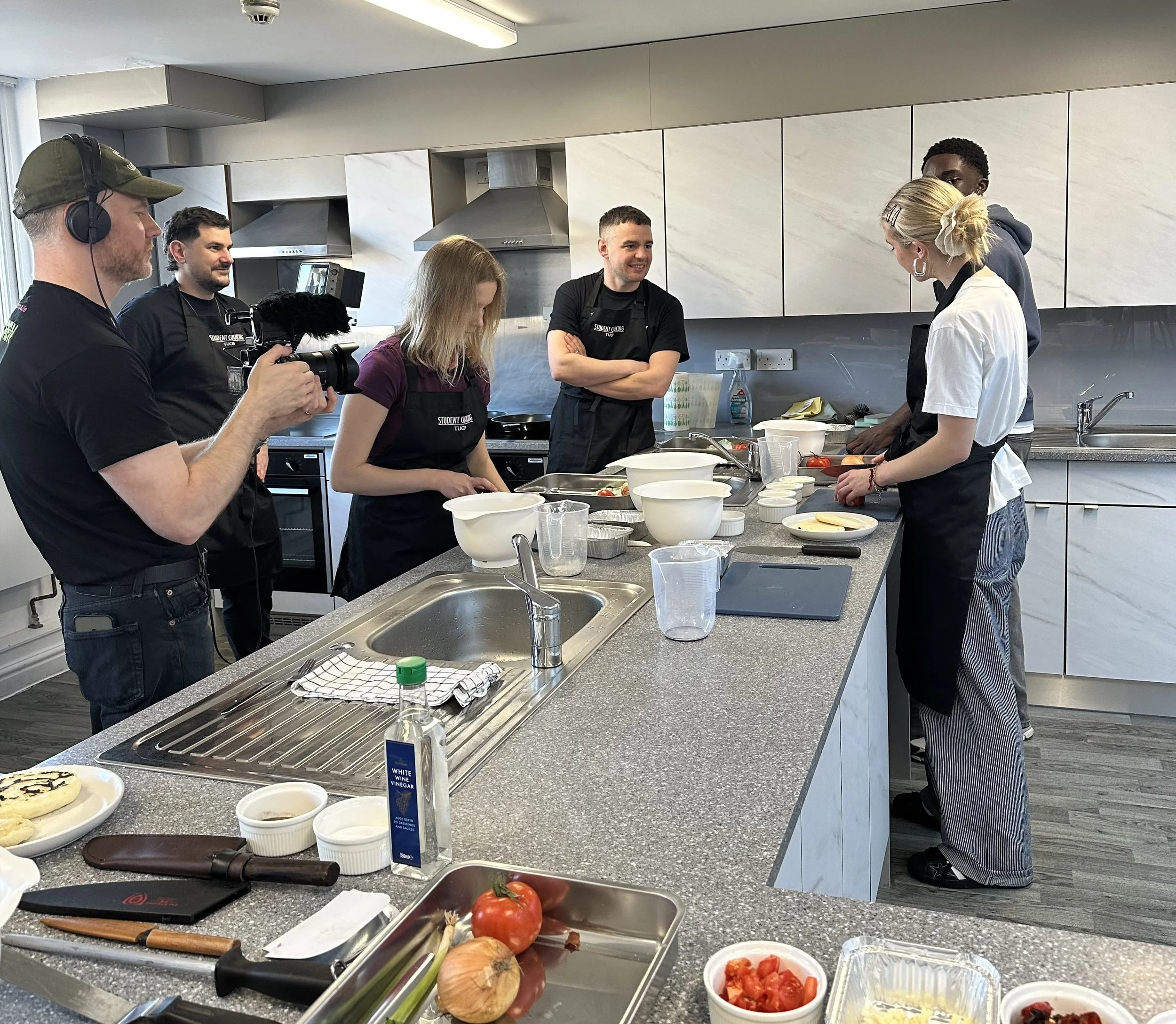
Think cooking classes, freebies, supplier pop-ups and themed celebrations.
Cardiff University hosts a community dining event almost every month – Supper Club – where students can enjoy a free plant-based, three-course meal. The catch? Only one free ticket can be booked per person, encouraging strangers to join and bond over delicious food. Although it may seem daunting for students, spaces continue to be booked up within hours of tickets being live.
5. Seasonal specials are great for returning visitors
Similar to weekly menus, dynamic series-like content like new special and limited-edition dishes and drinks keep viewers coming back.
From winter warmers to viral dishes, your customers will see big high street chains following these seasonal trends. This type of content resonates with people on and off campus and can tap into how students are feeling at specific moments in the academic year, whether that’s starting university, celebrating cultural festivals or a simple summer special — keeping content fresh, exciting and relevant.

Key takeaways
When working on food content, whether it’s for Browzer or another community-building platform, keep in mind these key principles:
Food content is a powerful traffic driver
Consistently sitting at the top of engagement stats across multiple universities in the UK.Students use food content to plan their day and budget
They check what’s on, where to eat, how much it costs and what value they’re getting throughout the year.Value and clarity win every time
Simple, well-structured content that clearly explains the basics like dietary options and opening times performs far better than PDFs and scattered information.Food is a great way to build community
Content that links food to events, culture and shared experiences supports belonging, wellbeing, awareness and time spent on campus.
Treating food as a core strand of your comms strategy and tracking performance helps to meet both commercial and student experience goals.
Interested in showcasing the catering offer on your campus in order to increase footfall and drive revenue? Speak to the CampusLife team today.
Ready to transform student engagement?